of Life
Episode 1 15:07
Why Getting What You Want Never Sets You Free: The Root of Suffering
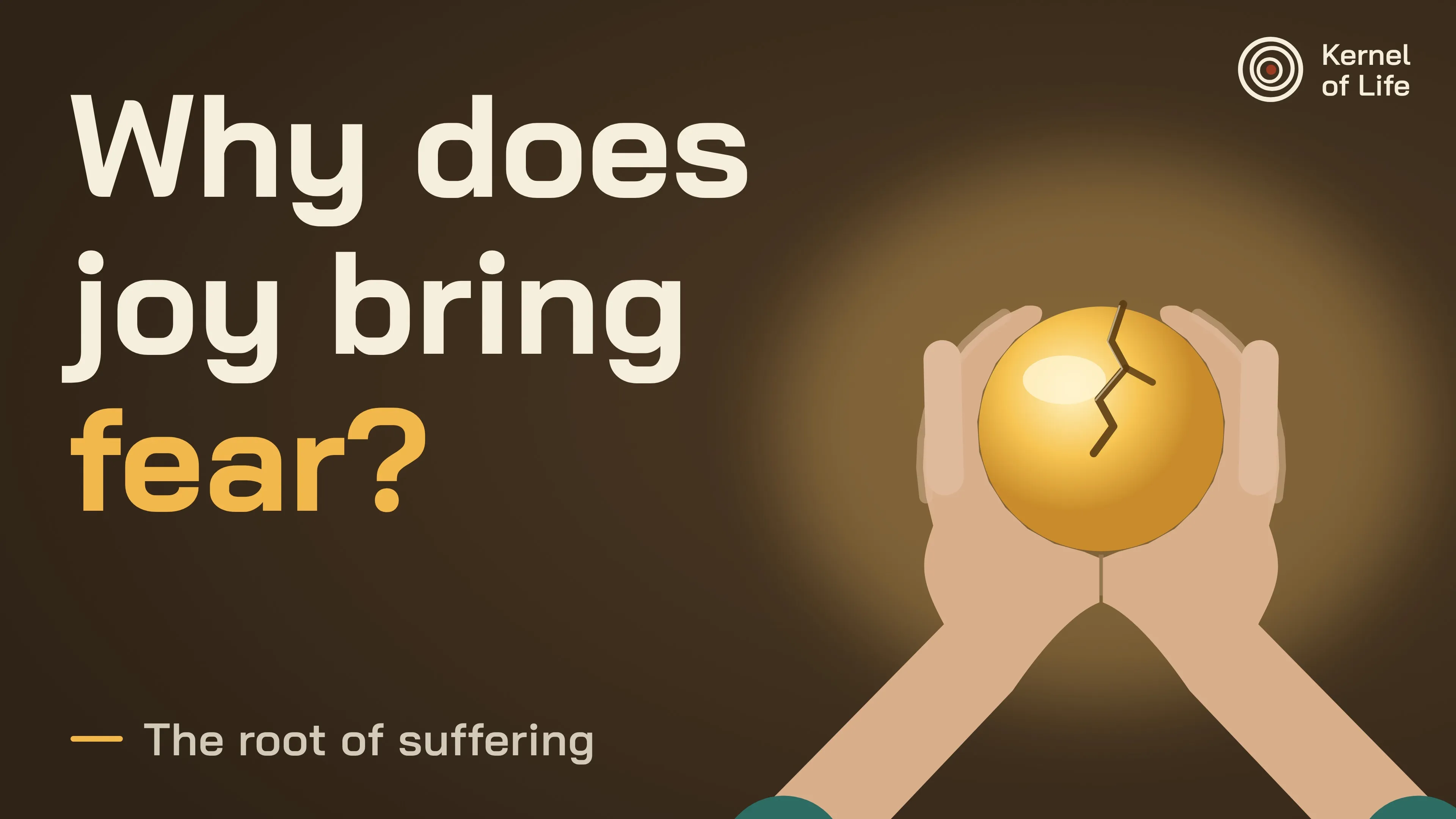
The first evening you finally hold what you worked years to earn, a spotless new car, a new phone with the clear film still on its glass, the promotion chair you dreamed of, you expect your heart to rest at last. Not long afterward the car is dented, the phone is scratched, and the chair has become the starting line for next quarter’s heavier target. We all know the saying that things arise, stand and pass away. So why are we never full with what we gain, and stung as if betrayed whenever good things shift?
Thai version: ทำไมยังไม่ได้ก็ทุรนทุราย พอได้มาใจยิ่งกลัวเสียไป (แก่นของความทุกข์)
Script
On the first evening you finally hold something you worked years to earn, whether a spotless new car rolling out of the showroom, a new phone as you peel the clear film off the glass, the key to a newly finished apartment, or a promotion chair you dreamed of for years, you expect your heart to finally rest. Yet watch what actually happens not long afterward. That brand-new car gets bumped and dented, its body scraped and no longer gleaming like day one; your mobile phone picks up scratches as its battery degrades faster; the thrill at the front door thins into habit; and that promotion chair becomes the starting line, for next quarter’s heavier target. Every one of us knows the familiar saying: all things arise, stand, and pass away. Why, then, knowing that sentence by heart, are we never full in what we gain, and stung as if betrayed whenever good things shift? The answer hides inside a quiet illusion, right inside that familiar phrase.
When people say things arise, stand, and pass away, or what Buddhists know well as the law of the three marks, the word stand tricks the mind into drawing a wide, flat, motionless terrace in the middle. We picture buying a new house, and hoping it will stand untouched in the same state for thirty years, waiting until its final day to crumble at once; or hoping a body in its thirties and forties will stay strong like this forever, waiting until old age arrives before declining. Yet over two thousand five hundred years ago, in the Sankhatalakkhana Sutta, the Buddha described conditioned things far more accurately. He did not merely say things arise, stand, and pass away. Instead, he named three marks: arising is evident, passing away is evident, and right while standing, alteration into something else is evident. Look at our own human body, from adolescence into young adulthood, through middle age and into old age. Decline does not wait to begin on the day hair turns white or shoulders stoop; even while we look young and strong, our body is altering and wearing down with every breath. Body, relationships, work, or Friday joy: nothing stays fixed without altering for a single second. Everything changes continuously even while standing, a law called viparinama-dhamma.
This alteration while standing is not bad luck punishing anyone, nor can power or money buy an exemption. In the Ratthapala Sutta, inside Migacira Royal Park in Kuru, eighty-year-old King Koravya questions Venerable Ratthapala, the young heir of a wealthy household, who left intact fortune and healthy youth to go forth. Ratthapala invites the aged monarch to examine his own body. King Koravya admits honestly: at twenty or twenty-five, he rode war elephants and horses with effortless skill; yet now at eighty, intending to set his foot in one spot, his foot steps somewhere else instead. Even a king’s own foot refuses royal orders in old age. Ratthapala asks further: if fierce pain strikes on the royal bed at night, can the King command his ministers and relatives round his bed, to divide his pain into shares so his ache grows lighter? Impossible, Koravya replies; I must bear that pain alone. Move that scene to a top-floor hospital suite today: money buys the softest bed, yet commands neither aging arteries nor parting loved ones.
Before going further, pause and look straight to the core of what we just saw. Our body, feelings, memories, thoughts, and awareness, which the Buddha called the five aggregates, live under the three marks and continuous alteration without exception. They are impermanent, unable to stay frozen, and ungovernable by wish. Above all, this alteration and decay is not an accident, that might or might not happen; it is guaranteed to unfold in every human life. Where, then, is mental suffering born? In the Upadaparitassana Sutta, the Buddha states the answer plainly: an uninstructed person who misses nature’s law, clings tightly to the five aggregates as me and mine, demanding that they stay permanent and obey command. Therefore, when body, feelings, or life inevitably alter and become otherwise, the clinging mind whirls and trembles with every shift, seized by dread, distress, and burning agitation born of clinging. Change itself is merely the ordinary law of the world; failing to see it as ordinary, and clinging to force it not to change, manufactures our suffering.
Look closer at daily life and you uncover something sharper still. Clinging does not wait until things break or vanish to wound us; it hides its teeth right inside our happiest hours. Set books aside and check your own chest honestly. Recall a day your work won praise across the room, recall young romantic love in its sweetest season, or a warm dinner beside parents and the people you love. Have you noticed that beneath your smile and fulfillment, a dark shadow of fear always hides? Deep down, a faint voice whispers: can I keep this standard next month, will my partner’s love change and stop being the same, or your eyes catch silver hair on your parents’ heads, and your heart drops silently. The instant we grab present happiness as mine, and demand that it stay frozen forever, pleasure arrives handcuffed to dread: the fear that the happiness in our hands is already altering or slipping away. The tighter we grip, the more we fear losing it. And when conditions shift, applause quiets, strength dips, or a once-sweet relationship changes season, yesterday’s clung-to pleasure flips its blade inward: viparinama-dukkha, suffering from the change of happiness that the heart refuses to accept, trying to hold it back from changing by nature.
Yet the story in our chest does not end with fearing happiness will slip away, because at the exact same moment, the other half of the mind sprints ahead in restless hunger. Look back five or ten years with honesty. How many promises did your younger self make: if only I land this job, if only my pay hits this figure, if only I buy this house or car, my life will finally feel full, settled, and at rest? Today, several of those exact dreams sit in your hands. Ask yourself plainly: how long did that first-day fullness last? Three days? Seven days? Two weeks? Once the thrill wore thin, what felt monumental turned into ordinary wallpaper, and familiar hollowness crept back into your chest, whispering the same old line: this still isn’t enough, you need one rung higher, one digit more. Look at the exhausting vise clamping daily life from both sides: what we lack, we burn with restless craving to get; once we win it, within days we feel hollow again and want more, while our other hand clenches the old prize, terrified it might slip away.
That insatiable hunger is laid bare in the second half of the Ratthapala Sutta, right inside Migacira Park. King Koravya asks what the Buddha meant by his fourth summary: the world is chronically incomplete, never satisfied, a slave to craving. Ratthapala answers with a mirror. Great King, is your kingdom of Kuru already wealthy and abundant? Yes, Ratthapala, truly abundant. Suppose a trusted messenger arrived from the east, reporting a vast land rich in treasure, guarded by weak forces easy to conquer; would you march out and claim it? Yes, we would claim it. Once you held the east, what if messengers brought the same news from the west, the north, the south, and across the ocean? Every single time, the eighty-year-old monarch whose own feet stumble as he walks, gives the exact same answer: we would claim that too. Ratthapala then speaks verses echoing across ages: rulers conquer earth to the ocean’s rim, yet unsatisfied with this shore, they hunger for the far shore too. As the Dhammapada states, not even a shower of gold coins from the sky satisfies human craving; serving a thirst with no finish line, people leave this world still incomplete.
Lay both halves together in clear light: a world altering every second, meeting a mind never full in craving, yet refusing to let anything it holds change; right there, the root of suffering flips upright, like an overturned bowl opened to the light. Notice carefully: nature’s change is neither cruel nor suffering itself. The exact law of change that makes blossoms fall, is what lets a tiny seed grow into a towering tree. The exact cellular turnover that wrinkles skin with age, heals a cut on your palm and turns midnight into morning. Arising, altering while standing, and passing away, is simply nature rolling along causal rails, like a train leaving a station on schedule. Picture a man on the platform wrapping a thick rope round his own wrist, knotting the other end to the rear of the train, and shouting inwardly: this train is mine, and must stand still before me forever. When the train moves on time, he is dragged bleeding across the stone. One question decides everything: what tore his skin, the train following its rails, or the knot of clinging he tied round his own wrist?
That is why, in the Dhammacakkappavattana Sutta, his first discourse after awakening, the Buddha never told us to stand on the tracks, trying to stop every train in the world. Instead, he taught that our first task toward suffering is to comprehend it as it truly is, seeing plainly that torment springs from craving and clinging, the rope tied round our own wrist. Speaking with full honesty, seeing this truth today does not mean a knot pulled tight for decades, falls undone in an instant; tomorrow when loss strikes, old habits may still jolt your chest. Yet clear seeing is already the decisive first unlock of suffering, because the instant a lamp lights a dark room, blind delusion breaks and intoxication sobers up. In the Sukhumala Sutta, the Buddha noted that uninstructed minds live drunk on three intoxications: youth as if never aging, health as if never sickening, and life as if never parting, while believing craving’s lie that the next prize brings permanent fullness. Once awake, even before every knot is loose, you stop cursing the sky in blind bewilderment; you recognize immediately that the train is following its normal rails, and the sting in your chest comes from your own hand pulling the rope.
When real decline or parting arrives at our door, how does someone awake to nature’s law differ from someone caught off guard? In the Sallatha Sutta, the Buddha answers with the unforgettable image of two arrows. Both an uninstructed person and a wise disciple, so long as they have a living body, inevitably meet aging, illness, and painful impacts born of conditions: that is being struck by the first arrow, nature’s arrow that nobody escapes. Where two lives part ways is the very next second. Someone blind to change as ordinary law, struck by loss or pain, sorrows, laments, beats their chest, strikes their head, and weeps in bewilderment: why did this happen to me, why did what is mine change? The Buddha says that person, already hit by the first arrow, fires a second arrow of mental anguish straight into the same wound, feeling two layers of pain at once, bodily impact and burning grief, then flees into new sensual distractions as a slave to craving. By contrast, someone who sees the three marks clearly, feels the first arrow by cause and condition, yet knowing it is ordinary nature, does not beat their chest, strike their head, lament, or fall into delusion: feeling one arrow alone, never firing a second arrow into their own heart.
Tonight or tomorrow morning, the next time your chest tightens, whether from restless hunger wanting more, or when something strikes your heart as life shifts, take three seconds to observe that tightness directly: spot both the rope round your wrist, and your hand reaching to draw a second arrow. Then take fifteen quiet seconds to tell yourself plainly: arising, altering, and passing away is the ordinary law of conditioned nature, not a curse singling me out. Catching that simple truth even once, lets your grip on the rope and the bow soften right away. Turning an overturned bowl upright to the light, never makes anyone passive or neglectful; on the contrary, once you stop spending strength beating your chest, weeping against nature, and sprinting for a thirst with no finish line, your life-energy returns whole to the present. You pour full skill into your work, tend your health by its causes, and cherish the people you love wholeheartedly while you are together; and when the day of change arrives, you meet it with wide-open eyes, never driving a second arrow into your own heart again.