of Life
Episode 8 5:50
Why Exhausted Brains Solve Burnout by Adding More Work
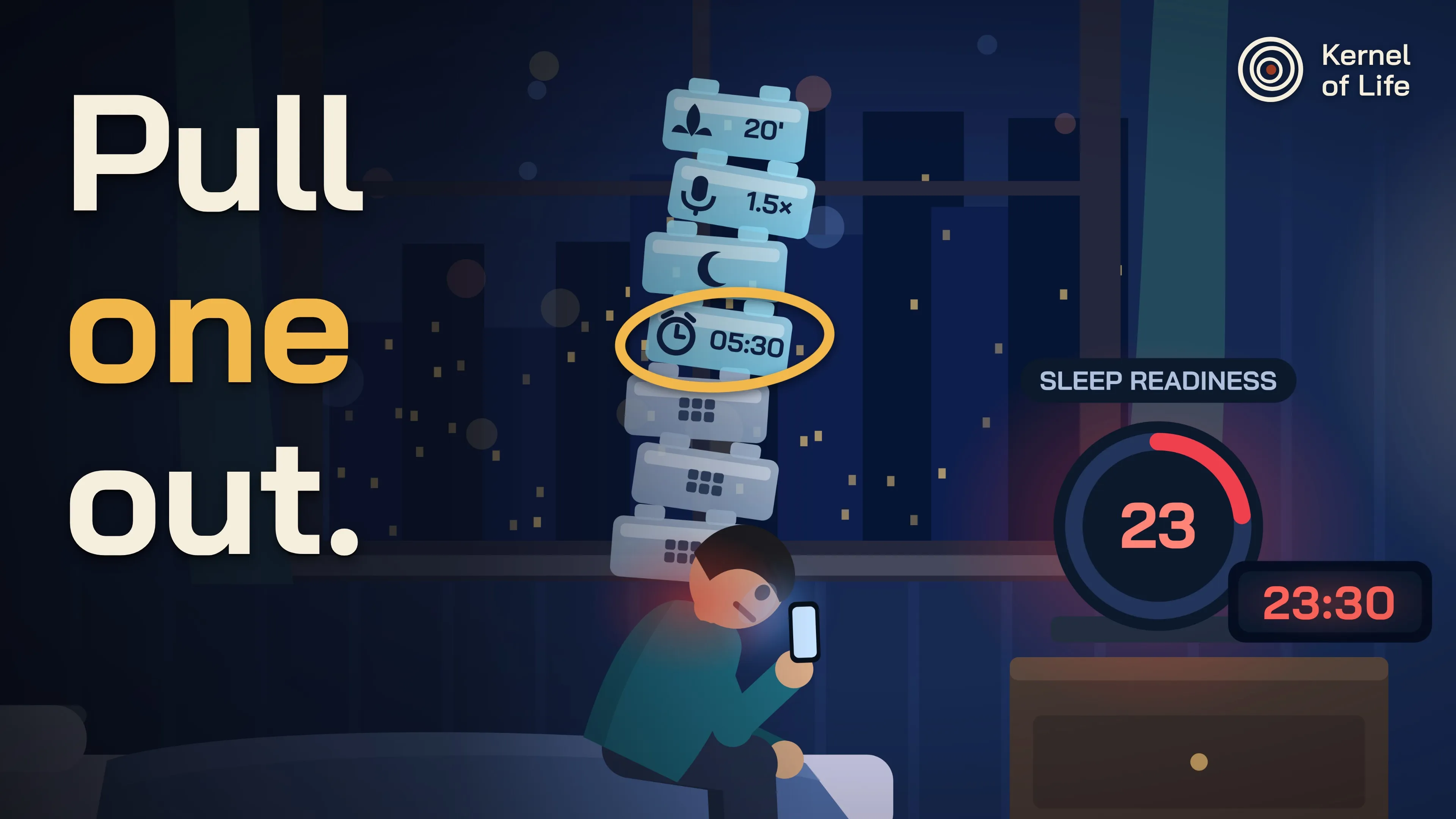
Tuesday night, 10:45 PM. Your shoulders ache from ten straight hours of meetings. Instead of dropping a single obligation that broke your day, your brain reaches for illusory control—setting a 5:30 AM alarm, installing a sleep-score tracker, queuing podcasts at 1.5x, and scheduling mandatory morning meditation—until your new sleep app flashes red because you stayed up organizing your recovery.
Thai version: ทำไมยิ่งเหนื่อยสายตัวแทบขาด สมองยิ่งสั่งให้ “หาเรื่องทำเพิ่ม”
Script
Tuesday night, ten forty-five. Your neck and shoulders ache from ten straight hours of meetings. Instead of dropping a single commitment that broke your day, your brain reaches for the fastest hit of illusory control: unlocking your phone and assigning yourself extra homework. You set a five-thirty alarm, install a sleep-score app, queue a podcast at one-point-five speed, and block twenty minutes of mandatory morning meditation so you can grind harder at nine. By eleven-thirty, your recovery system is finally complete, right on cue for your new sleep app to flash red and warn you that tomorrow’s readiness is already ruined.
Because Tuesday collapsed, you swear Saturday will be pure recovery, then bring your office calendar along as a chaperone. At two-ten in a cafe, a close friend you haven’t seen in six months opens up about a painful crisis at home, and you catch yourself glancing at your watch under the table because your calendar says Two-thirty to Three-thirty: Personal Growth Reading, followed by Five to Five-forty-five: Park Walk. You didn’t take the weekend off; you just promoted yourself to unpaid weekend supervisor. Across thirteen behavioral studies in the Journal of Marketing Research, locking leisure into exact start and end clock times flipped a mental switch, turning free time into chores and draining real enjoyment. So the obvious fix is deleting one slot, right? Except human brains carry a startling blind spot here. In a twenty twenty-one Nature experiment, ninety-eight adults got a one-dollar bonus if they stabilized a tilted Lego roof perched on a single corner brick before a real stone block crushed the figure beneath. Every support brick added underneath deducted ten cents, while pulling out that single corner brick let the roof drop flat onto the wide base above the figure for free. Now guess. Even when adding bricks shrank their cash reward, what percentage failed to pull out that single piece?
Fifty-nine percent gave up ten cents a brick to prop up a crooked roof with extra plastic; only forty-one percent pulled out the offending piece. Across six hundred and fifty-one improvement proposals sent to a university president, nearly nine out of ten added new rules or programs, while just eleven percent subtracted anything. Most revealing of all, when over a thousand participants had to juggle two mental tasks at once, their blindness to subtraction grew even worse. Slapping a patch on top is mentally cheap; subtracting takes enough bandwidth to picture the whole structure and trust it will hold without that piece. Like a company curing burnout by mandating a ninety-minute stress webinar, the heavier your pack gets, the harder an overloaded brain reaches for another stone.
Why do smart people fall for addition every time? Outwardly, adding leaves visible proof: launching a new project wins praise, while quietly canceling a pointless meeting or leaving Saturday evening blank earns zero badges on anyone’s screen. Inwardly, the hook cuts deeper. Adding preserves the comforting fantasy that with one better system, you can carry everything without limits. Subtracting forces you to accept human finiteness, say a clean no, and let someone’s expectation go unmet. Test this on yourself right now. Drop your shoulders and unclench your jaw twenty percent; feel how relief arrives instantly through zero effort. Think of the last time you typed a three-paragraph defense to someone you love, when deleting every excuse down to just I’m sorry would have healed the room in seconds. And notice how even with your eyes shut, you patrol yourself like a construction site never permitted to be finished.
That exact habit comes to life in the Parable of the Raft from the Alagaddupama Sutta. A traveler reaches a wide, dangerous river with no bridge or boat. Wisely, he gathers branches and leaves along the bank, binds a raft, and paddles hard until he steps onto safe dry ground. Building that raft to cross turbulent water saved his life. Yet once on firm land, he gazes at the dripping raft in gratitude and says, This raft helped me so much; let me hoist it onto my head or shoulder and carry it into the forest. Hyper-vigilance, perfectionism, and saying yes to every demand may genuinely have been the raft that kept you afloat at twenty-two. At thirty-five, standing on firmer ground, refusing to thank that old raft and leave it on the bank turns what once saved you into sodden wood crushing your shoulders every day.
Tonight, we are not putting another stopwatch on your rest. Simply catch your hand the next time exhaustion hits and your thumb reaches to add one more rule. Scan tomorrow for just one habitual brick to pull out, one obligation kept only out of guilt. Clear the clock times off your evening, turn your phone face-down, and leave tonight ungraded. Peace was never a trophy at the top of your pile; it is the solid ground underneath you the instant you set the extra weight down. Subscribe to Kernel of Life to strip away unnecessary weight, think deeper, and hold lighter.