of Life
Episode 13 7:02
Dependent Origination Explained: Which Link Breaks?
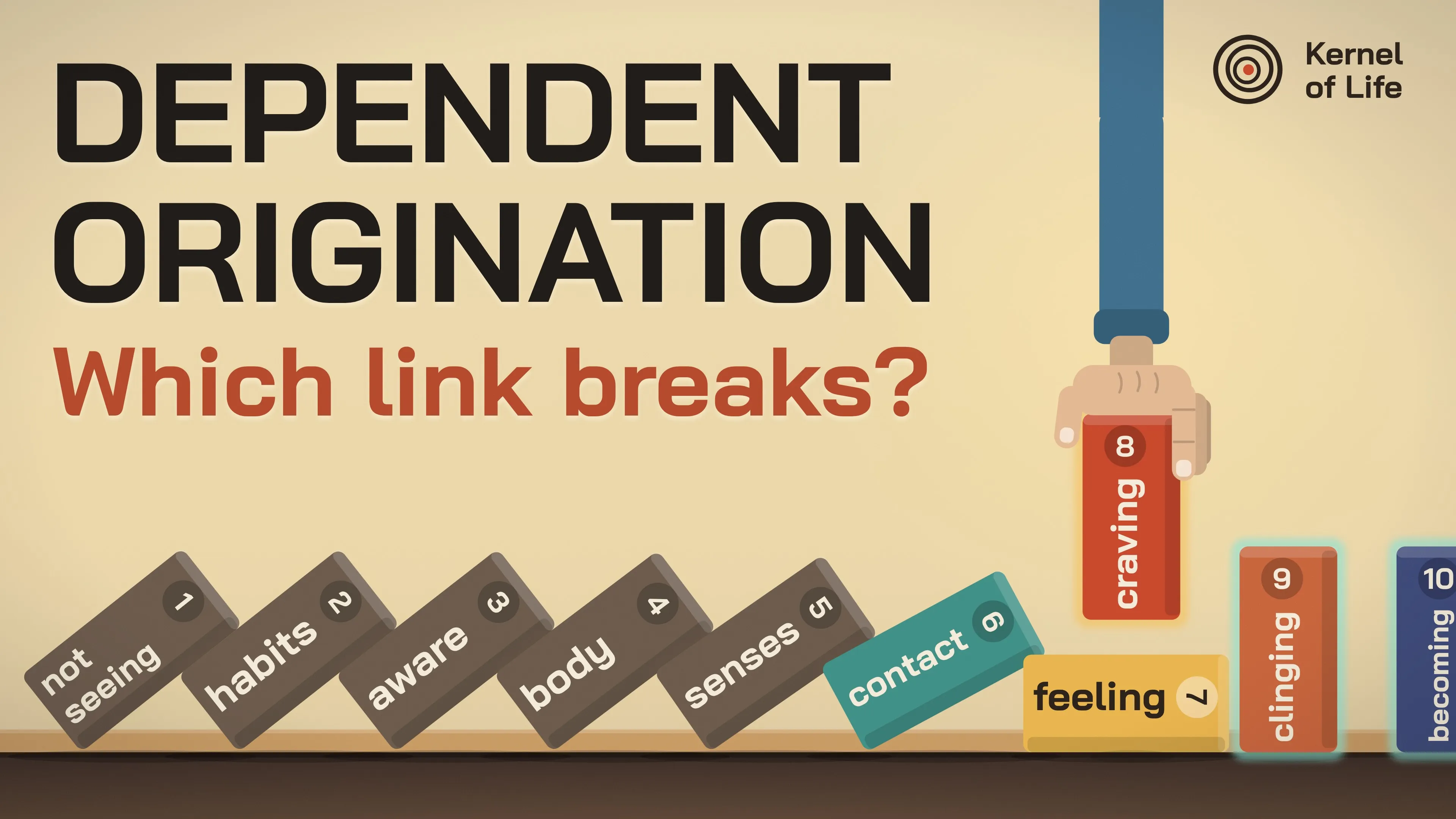
Dependent origination explained in one sentence: suffering does not just happen to you, it is assembled link by link, like a row of dominoes, and whatever is assembled can be stopped at a link.
Thai version: ปฏิจจสมุปบาท คืออะไร? ทุกข์ตัดได้ที่ข้อไหน
Script
Dependent origination, explained. It says that suffering never arrives in one piece. It is assembled, link by link, like a row of dominoes. When this is, that is. You ran the whole row yourself last night, in under a second, when your phone lit up. And if suffering is built one link at a time, then somewhere in that row there is a link you can take out. So which one?
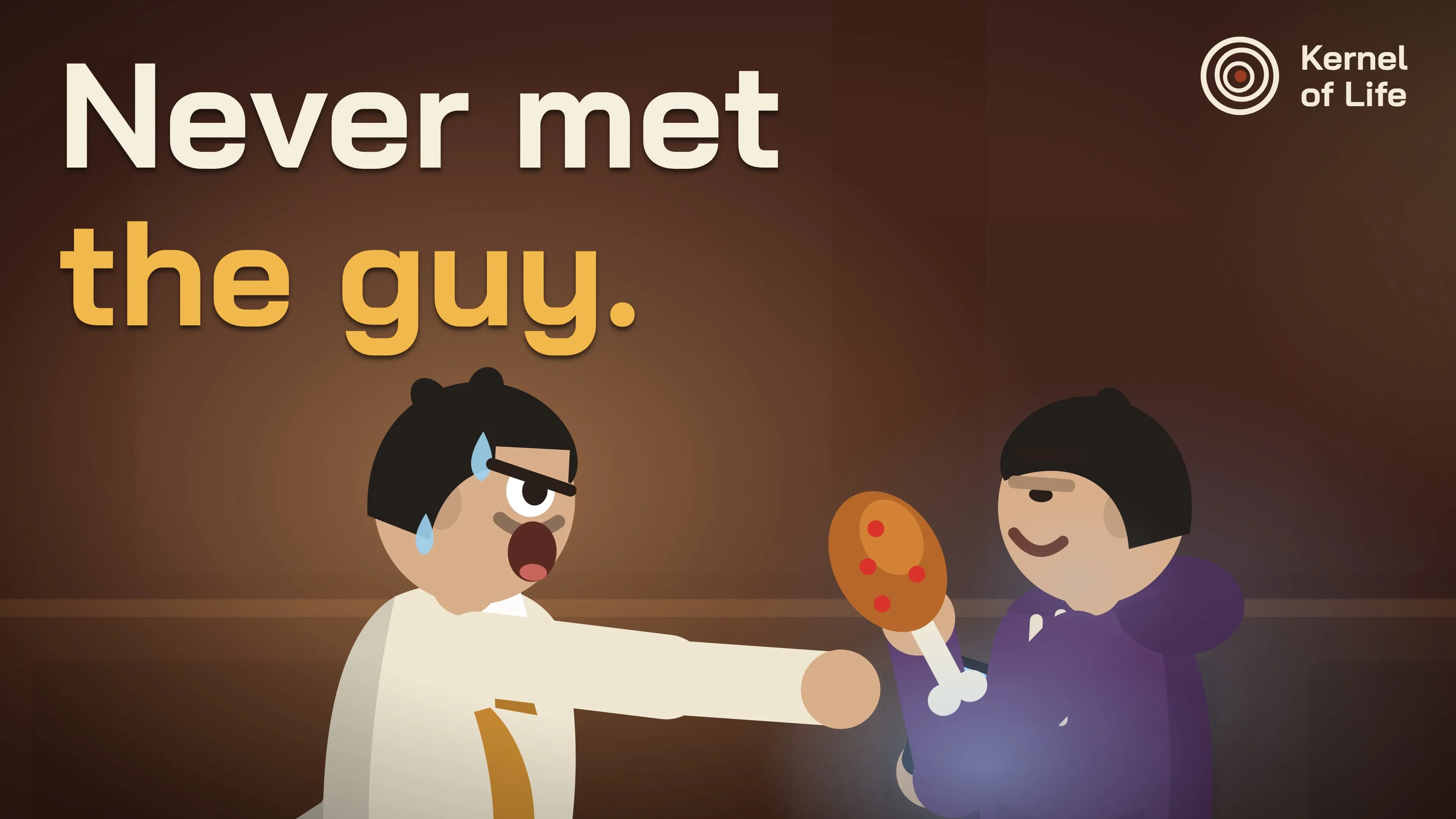
It is four minutes past nine. You are on the sofa with a bowl of noodles. One message. Your friend cannot make Saturday. Again. Your eye meets the screen. That is the first link: contact. Something drops in your chest. Feeling. Before you have chosen anything, you want it to be otherwise. Craving. You scroll back. Last month, she was busy. The month before, next time. Three times now. You are holding on. That is clinging. And now you are someone: the one who always gets dropped. Becoming. That person sits up and takes over the evening. Birth: a “me” is born. The noodles go cold. At ten past one you are still awake, writing replies you will never send. The old texts call this part aging and death, sorrow and grief: the whole mass of suffering. The message took two seconds to read. The night took four hours. And not one of those steps felt like a choice. Here it is again, at its real speed. That was seven links. The Buddha counted twelve. So where are the other five?
Here are all twelve. The first five were already standing before your phone lit up. Not seeing how any of this works. Habits, shaped by a thousand evenings like this one. Awareness. A body and a mind. Six senses, open. Then the seven you just watched: contact, feeling, craving, clinging, becoming, birth, and the suffering that follows. A word on how to read this list. The old commentaries spread these twelve links across three lifetimes. The Thai monk Buddhadasa read them the way you just saw them: all twelve inside one moment, many times a day. That is the reading in this film. Subscribe so you don’t miss new films. And if the row falls many times a day, you get many chances a day. But a chance to do what? For that, we go back to the night it was first laid out.
Uruvela, on the bank of the river Neranjara. The Buddha, newly awakened, has been sitting under one tree for seven days. Then, in a single night, he goes through the whole row. In the first hours of the night, forward. When this is, that is. From not seeing, link by link, to the whole mass of suffering. In the middle of the night, he goes the other way. When this is not, that is not. With the not seeing gone, the next link has nothing to lean on. Nor does the next. In the last hours before dawn, he goes through both together. And the verse he speaks then compares it to the sun lighting up the sky. So the famous formula has a second half. And the second half is the point. It tells you how the thing stops. Now, back to your sofa.
Same evening. Same message. Which link would you take out? Now guess. Most people pick the first one they can see: contact. Block her. Switch off the phone. Try it. A doorbell. An old song. A memory, out of nowhere. Something touches you again within the minute. To stop it all, you would have to close your eyes, your ears and your mind. So people pick the next one. Just don’t feel it. Try that. It will not come out. The drop in your chest arrives before you get a vote. Now try the one beside it. The wanting. It lifts straight out. Here is why. The Buddha’s own list starts the unbuilding at number one: not seeing. Lifting number eight is the same thing, done in time. You see number seven while it is still only a feeling. The pain was never the problem. The problem is what gets stood up next to it. So what does the evening look like without it?
Four minutes past nine. The same sofa. The same friend. The same message. Your eye meets the screen. Contact. The same drop in your chest. Feeling. But this time, you say what it is. Unpleasant. Just that. One. Two. Three. The feeling falls flat, and nothing is standing there to take it further. No case to build. Nobody to become. You write back: no problem, another time. Or you do not write back yet. The noodles are still warm. It is seven minutes past nine. Nothing outside you has changed. One thing was not built. The next morning, in traffic, you miss it completely, and the whole row goes down. That is normal. The row falls many times a day, so you get another try within the hour. But if it is this simple, why did the Buddha call it deep?
The answer is in a short exchange, in the land of the Kurus. His attendant Ananda said: this teaching is deep, and yet to me it seems as clear as can be. The Buddha said: do not say that, Ananda. Do not say that. It is deep. People who cannot see it, he said, live like a tangled ball of thread. That is your evening at ten past one. One knot, called my terrible night. Dependent origination is the same thread, pulled out straight. On a diagram it really is clear. At four minutes past nine it is a knot again. Understanding the list is one skill. Seeing it while it happens is another.
So tonight, when your phone lights up, try one thing. Before anything else, name the feeling. Pleasant. Unpleasant. Three seconds. That is one link, lifted once. And where the wanting comes from in the first place is our film The Root of Suffering.