of Life
Episode 9 5:36
Do Nice People Always Get Eaten Alive? (500 Generations Simulated)
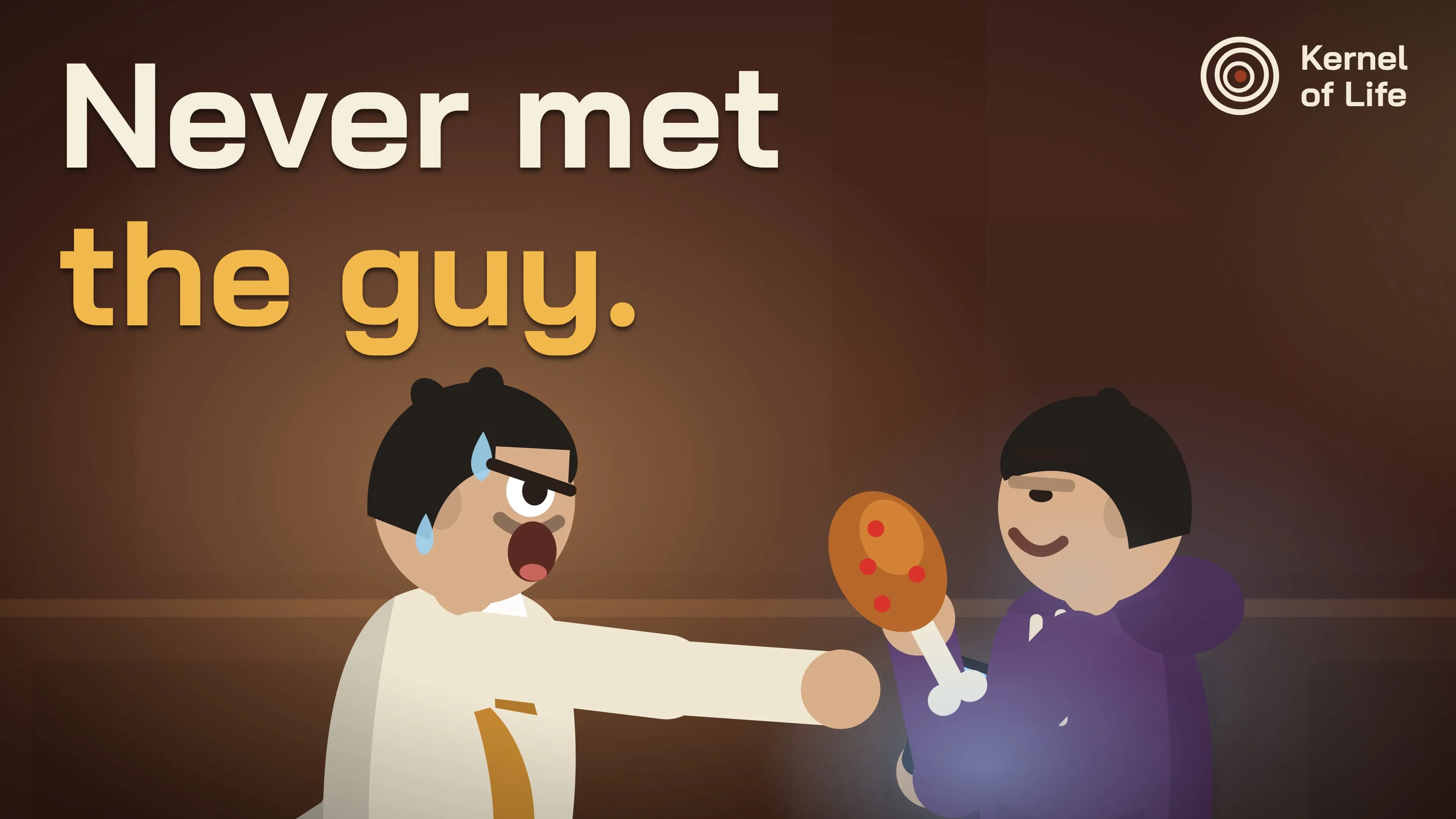
Three weeks straight, you stayed late fixing a teammate's messy numbers. Then, on the day your own deadline is on fire, they send the combined report to the boss with their name on top and stroll out at five. Am I a fool for being decent?
Thai version: คนดีอยู่ยากจริงไหม? เมื่อจำลองชีวิตแข่งขันกัน 500 รุ่น
Script
Thursday, five to five. Three weeks straight, you stayed past seven fixing a teammate’s messy numbers. Today, with your own deadline on fire, they send the combined report to the boss with their name on top, and stroll out at five: “Swamped this week, catch you next round.” You sit there smiling, hands cold: am I a fool for being decent? But if cheaters always won, evolution would have wiped decent people out long ago. So why are we still here? Let’s find out in a simulated city: two hundred people, four personalities, five hundred generations. The winner is not the nicest, and not the meanest.
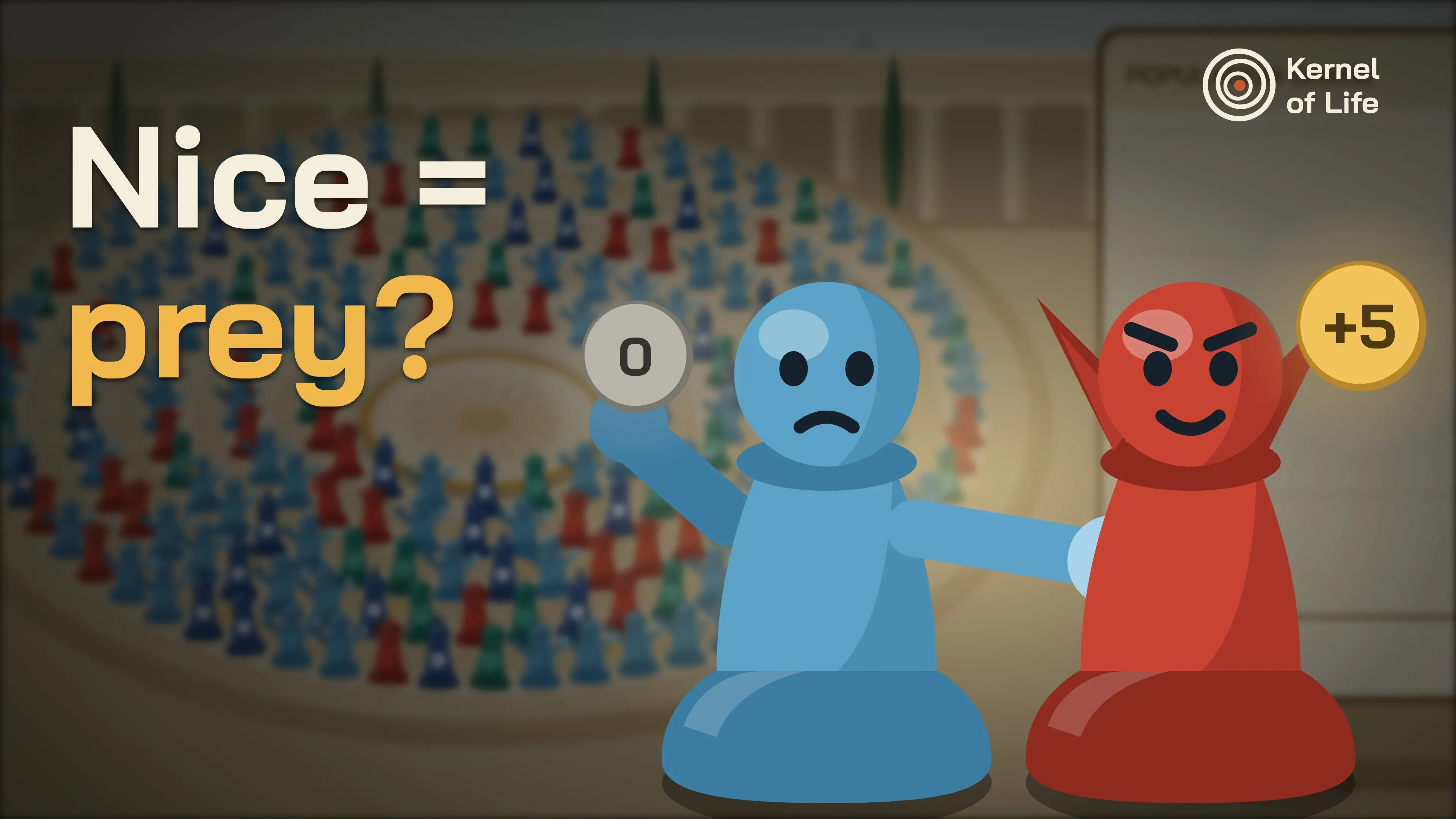
The rules are simple. Two people meet, and each chooses: help, or cheat. Both help: three points each. One helps, one cheats: the cheater takes five, the helper gets zero. Both cheat: one point each. More points, more children in the next generation. Four kinds of players. Light blue, the Pushover: helps everyone, always. Red, the Shark: cheats everyone, every time. Dark blue, Tit for Tat: helps first, then does whatever you did last time. And green, the Generous one: a lot like Tit for Tat, but with one secret habit. We’ll reveal it later.
Round one: a perfect computer world, where nobody misreads anybody. Watch the first fifteen generations. Every Shark that meets a Pushover scores five free points, so Sharks breed fastest, until the Pushovers are extinct. Lesson one: kindness with no line doesn’t just wear you out. It feeds the sharks. But once the prey is gone, sharks can only bite each other, for one point a round, while Tit for Tat players help each other for three and never let a shark cheat them twice. Soon the sharks are gone too. Robert Axelrod once had real computer programs play this very game against each other. The winner was the simplest entry, four lines long: Tit for Tat.
But real life is not that clean. A friend misses your message because their kid has a fever. Your partner texts back one cold word because they’re driving in the rain. Good intentions, read as betrayal. So we add a five-percent chance of misreading, and start a fresh city. Now guess. After five hundred generations, does Tit for Tat still rule?
It doesn’t. One misunderstanding is enough: one player thinks they were cheated and hits back, the other sees an attack out of nowhere and hits back too, and they trade blows forever, like two good friends giving each other a month of silence over one short text. The city ends up green, just as Martin Nowak and Karl Sigmund found in their simulations in Nature. Green’s secret: when cheated, it pushes back two times out of three, but forgives about one time in three. Enough to end an accidental feud in a few rounds, yet firm enough that sharks can’t win. That’s the kernel: be kind, but never be prey. Start kind. Draw a line when you’re used. Forgive the honest slip.
Sounds simple. It’s hard, because we tie drawing a line to getting angry. Saying “it’s fine” while your gut ties itself in a knot: kindness, or fear of twenty awkward seconds? Snapping back hard: strength, or handing them your puppet strings? The Vepacitti Sutta answers this. After a great war, the defeated asura lord Vepacitti is bound with five bonds, hands, feet and neck, and brought into Sakka’s council hall, where he insults Sakka each time he walks past. Sakka’s charioteer, Matali, warns: “Stay silent, and the fool will think you’re afraid and charge harder, like a bull chasing someone who runs.” Sakka replies: “Let him think so. When the strong are patient with the weak, that is the supreme patience. Whoever repays anger with anger only makes things worse for himself.” Notice: Vepacitti was bound before Sakka said a word. The ropes stop the fool’s hands. The calm stops his insults from running your mind.
Tomorrow is Friday. Take green’s three moves to your desk. One: with someone new, start kind. Don’t punish them for an old taker’s crime. Two: with a repeat taker, draw the line in one calm sentence: “I’m locked on my own deliverable. Drop your section in the shared folder; I’ve labeled each author in the combined report.” No shouting, no midnight teeth-grinding. Three: when a good friend slips once, forgive first, before pride turns a small thing into a war. Kindness never meant becoming prey. Decent people who draw clear lines without storing poison are the strongest survivors of all. Subscribe to Kernel of Life: think deeper, hold lighter.