Nano Impact Electrochemistry: Effects of Electronic Filtering on Peak Height, Duration and Area
ChemElectroChem 2018, 5, 3000–3005. doi:10.1002/celc.201800738
Instruments · workstation
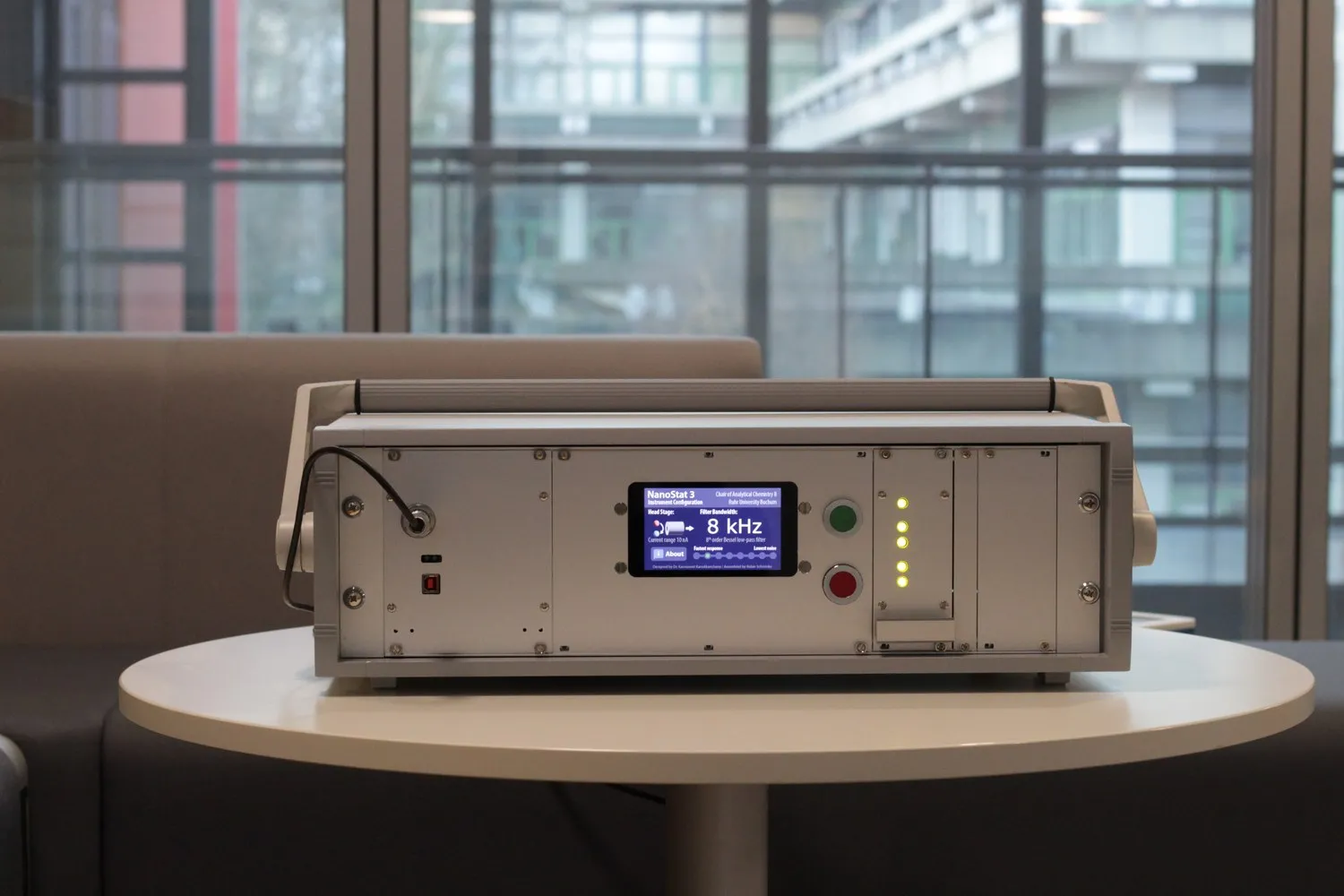
A high-bandwidth potentiostat built for single-nanoparticle electrochemistry
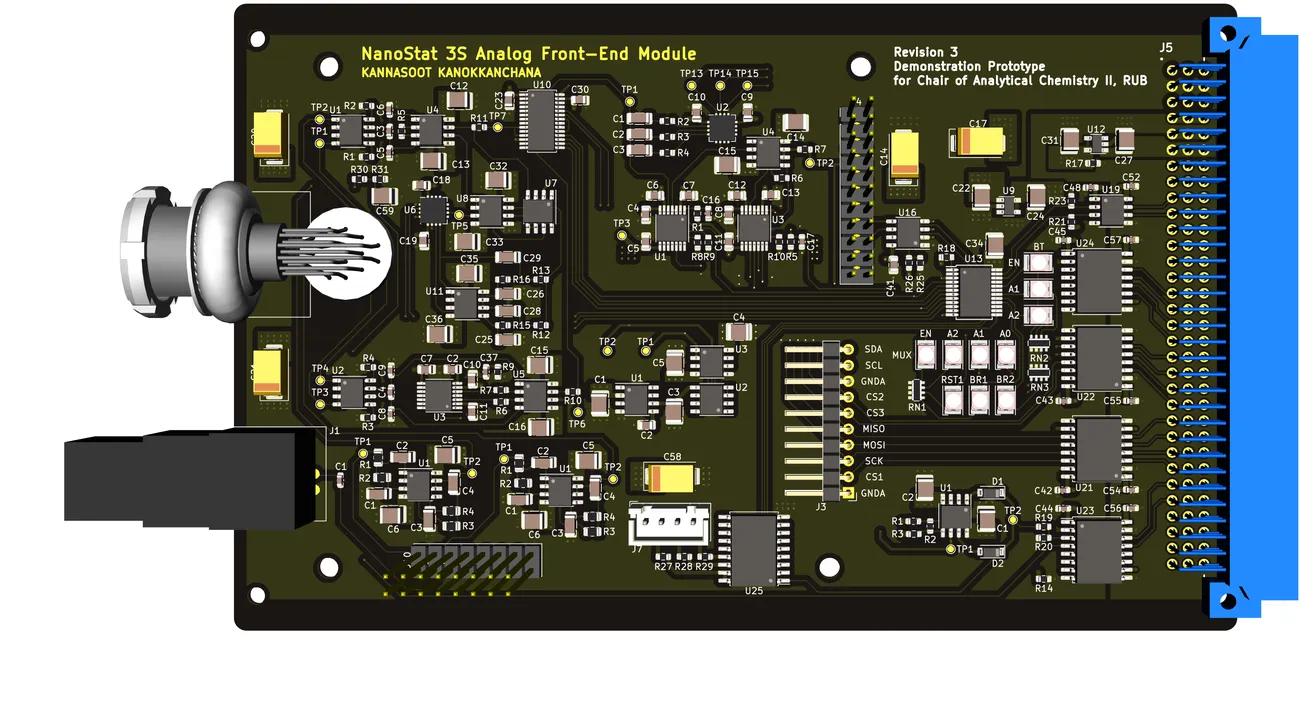
Every commercial potentiostat we tested either buried sub-millisecond nano-impact spikes in noise or smeared them beyond recognition — their internal filters distort exactly the signal the experiment needs. NanoStat is the answer: a complete in-house measurement chain from the analogue front end to the acquisition software, engineered so that a single nanoparticle striking a microelectrode is resolved as it really is.
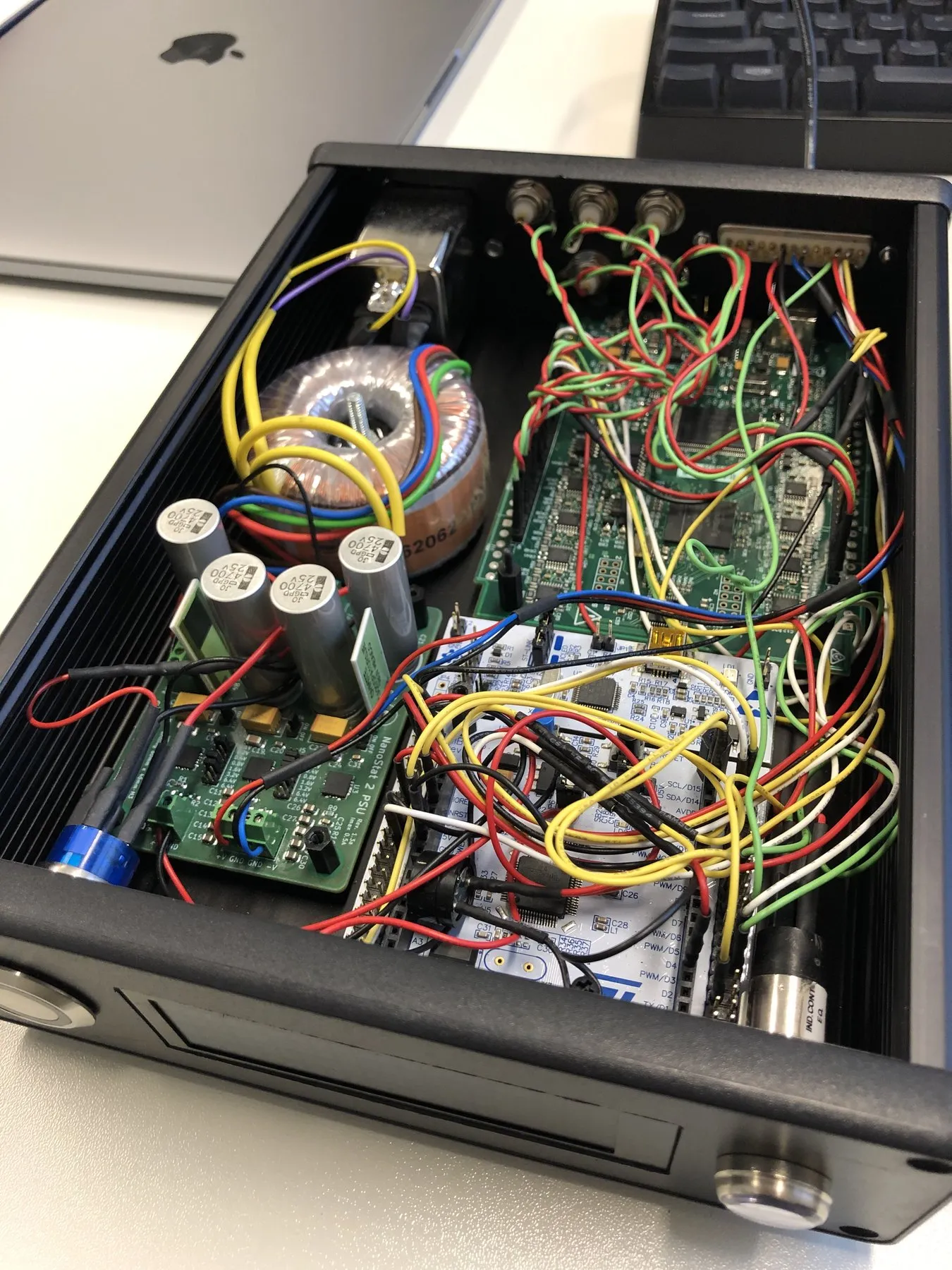
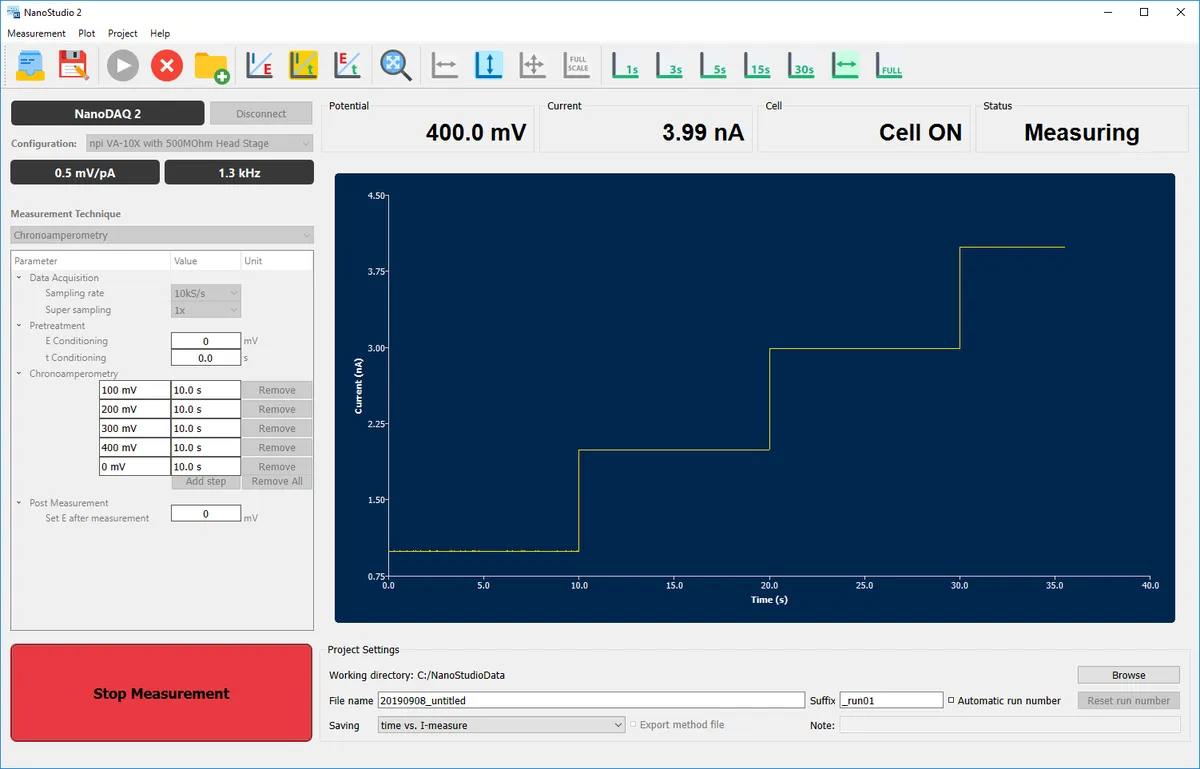
NanoStat 3 is the third generation of the potentiostat, fully equipped for ultra-low current measurements with programmable bandwidth, allowing single-nanoparticle electrochemical measurements with high throughput and extreme bandwidth — at the edge of what is possible. It builds on the continual development of the line: the NanoStat prototype of 2018, a proof of concept pairing a transimpedance amplifier with a programmable electronic filter, followed by NanoStat 2 and NanoDAQ 2, which served as the high-speed analogue-to-digital interface between the analogue circuitry of the electrochemical front end and the NanoStudio software. Each generation carried forward what worked and replaced what limited it. NanoStat 3 brings the front end, filtering and acquisition together in a single instrument that is in daily use for single-entity electrochemistry.
ChemElectroChem 2018, 5, 3000–3005. doi:10.1002/celc.201800738
The Journal of Physical Chemistry Letters 2022, 13, 10120–10125. doi:10.1021/acs.jpclett.2c02720
Journal of The Electrochemical Society 2022, 169, 056508. doi:10.1149/1945-7111/ac63f3