Instruments · handheld
Handheld Potentiostat
A field-deployable potentiostat, designed and built in-house from the first prototype to a fleet of 200
The handheld potentiostat carries the design philosophy of the nanoscale laboratory out into the field. It is a complete instrument developed from a blank schematic — analogue front end, digital acquisition, power management, firmware and enclosure — every piece designed, built and calibrated in-house, and its manufacturing planned and managed from the first batch to the last.
What “field-ready” really means
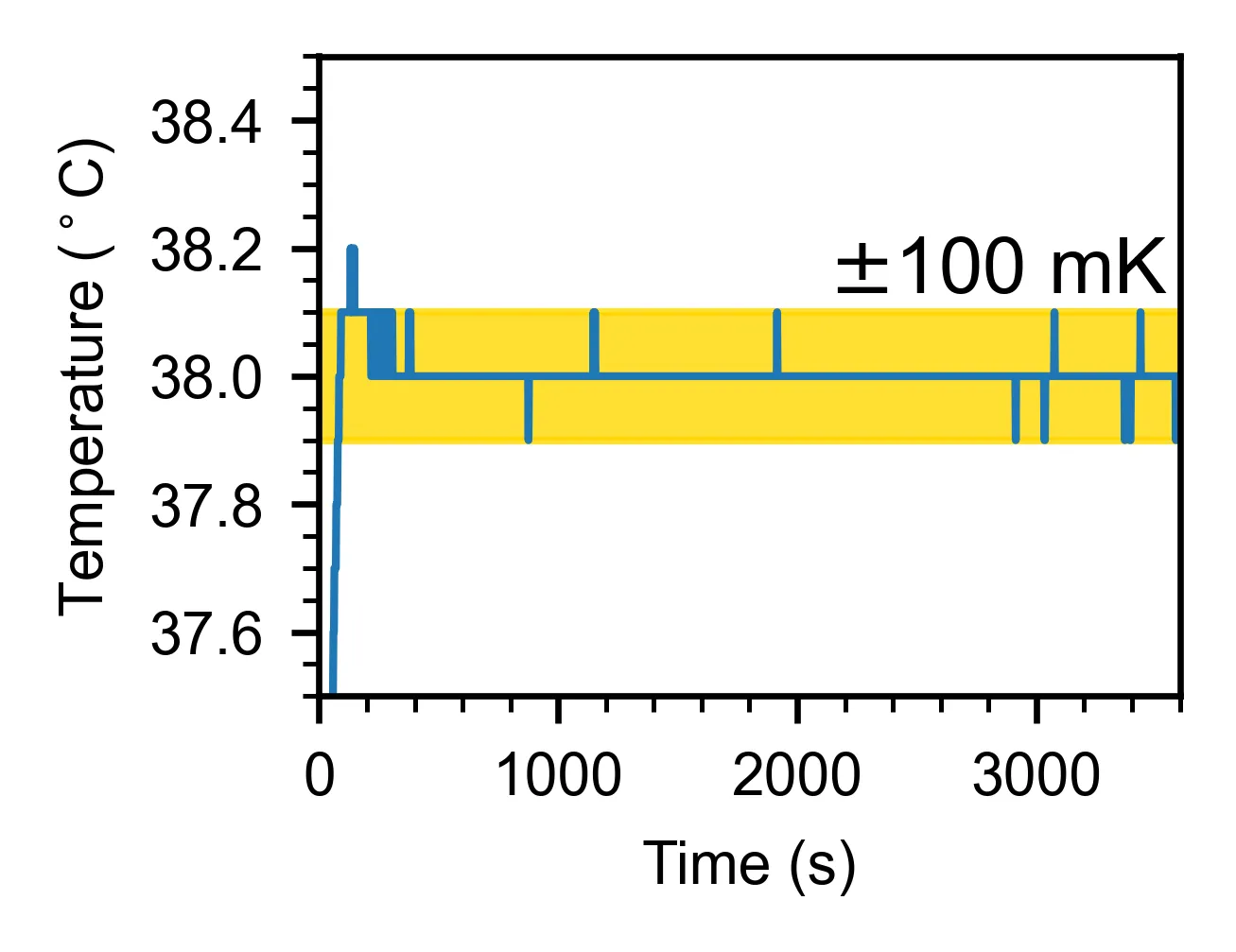
An instrument that works beautifully on a bench, operated by a scientist, is not yet a field instrument. Outdoors it has to run without a laptop, cope with temperature swings that would shift an enzymatic assay, survive a day on one battery charge, and collect data so systematically that nobody has to remember what was measured where. The second generation answered each of those with hardware: a heating element that regulates the measurement chamber to ±0.1 °C, a real-time clock that stamps every record, on-device logging and a power budget tuned down to the display driver.
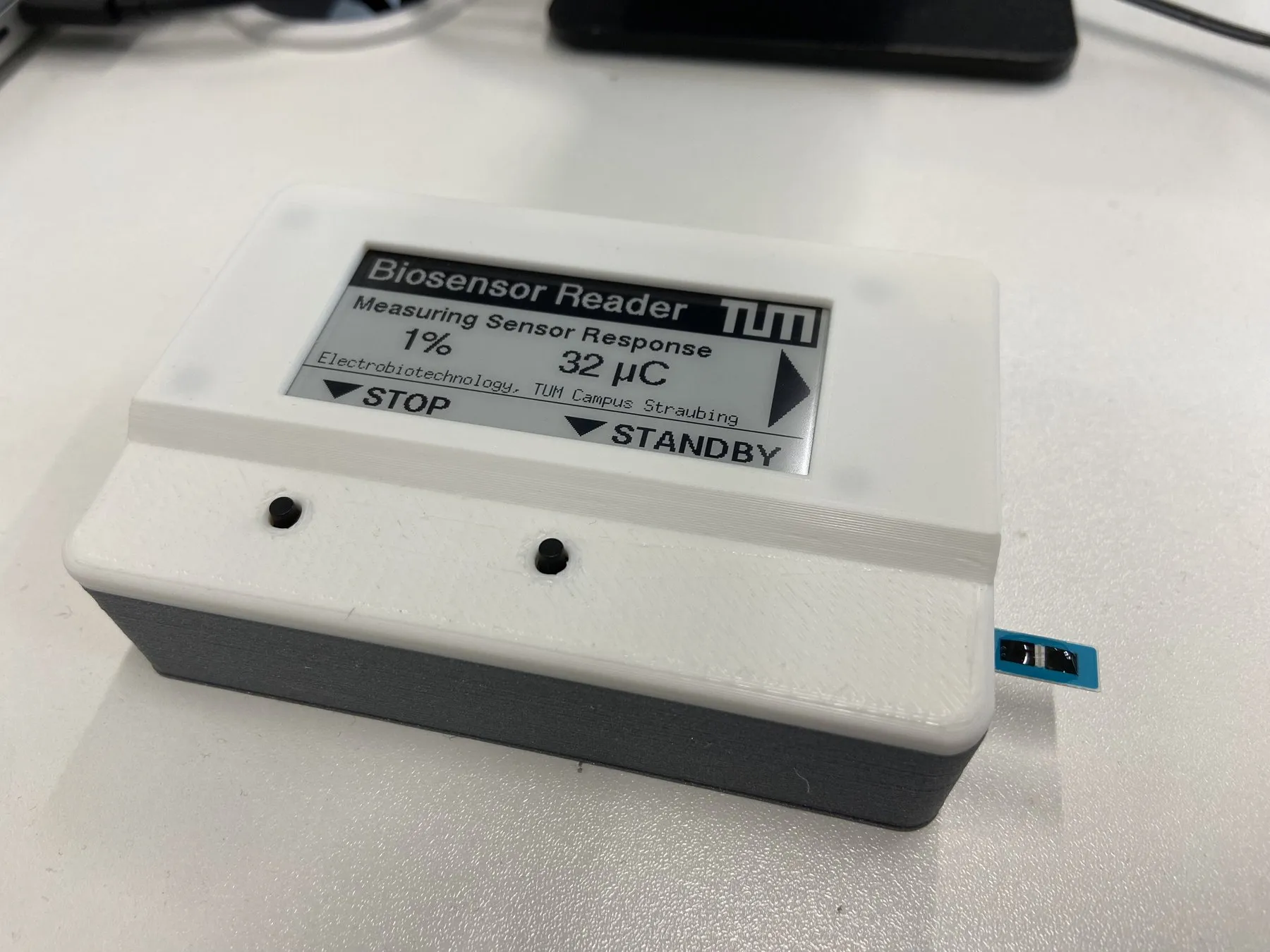
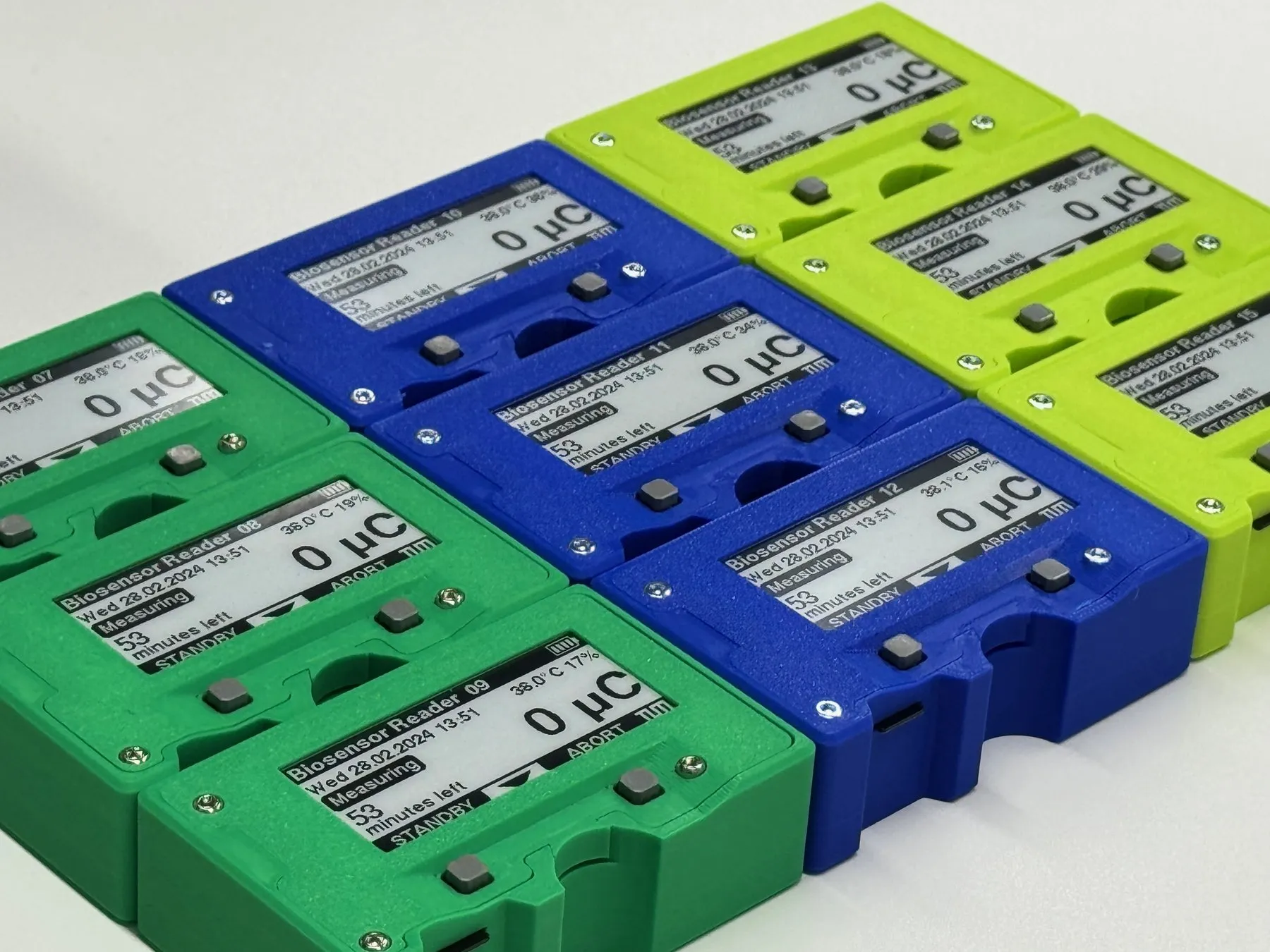
The result is a one-button instrument. Plug in a sensor strip, press start, and the device pre-conditions the sensor, warms the chamber, runs the electrochemical method, regulates temperature throughout, logs date, time, device ID and data, and switches itself off. Anyone obtains laboratory-quality data without instrument training.
Three generations in three years
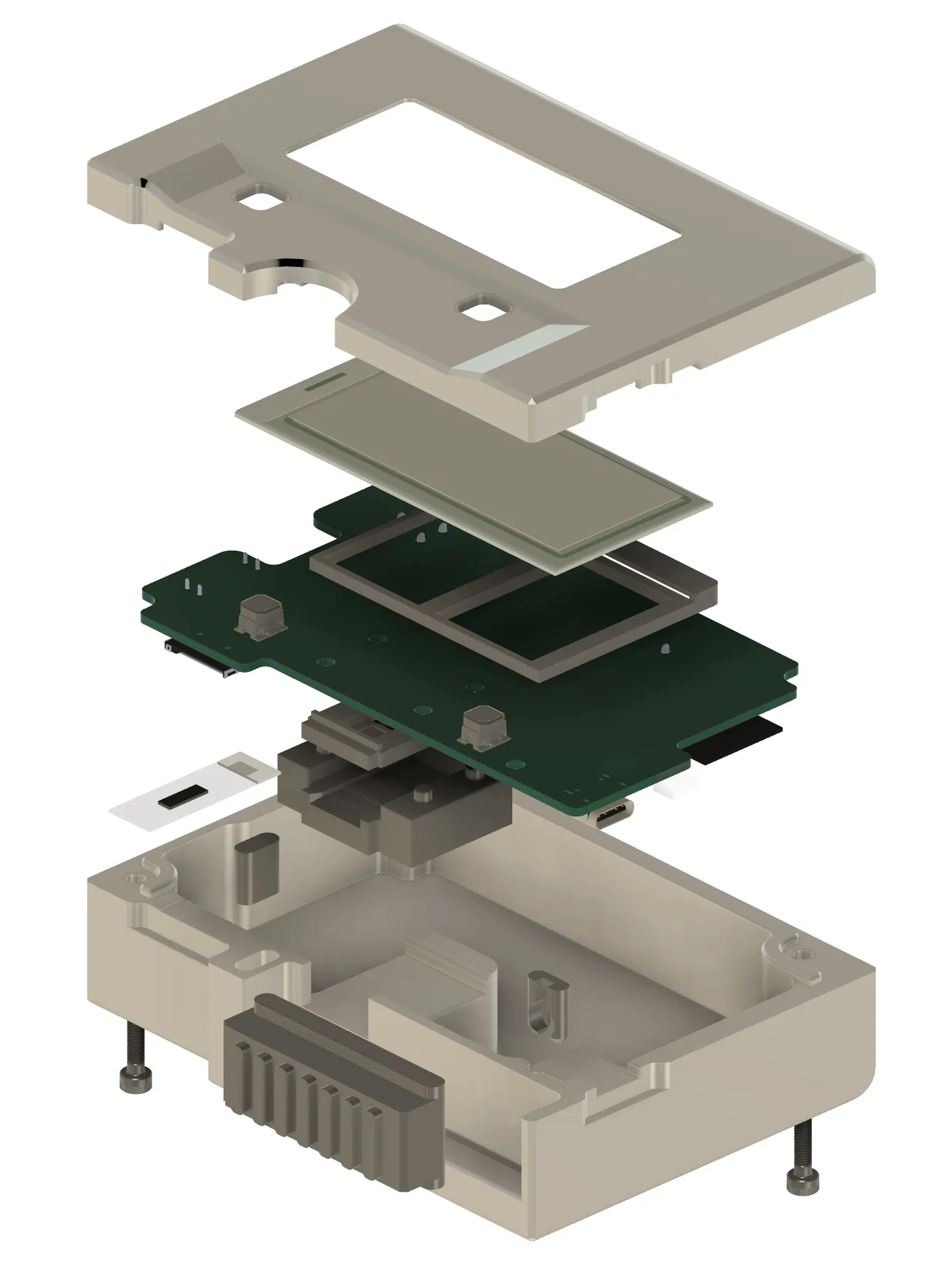
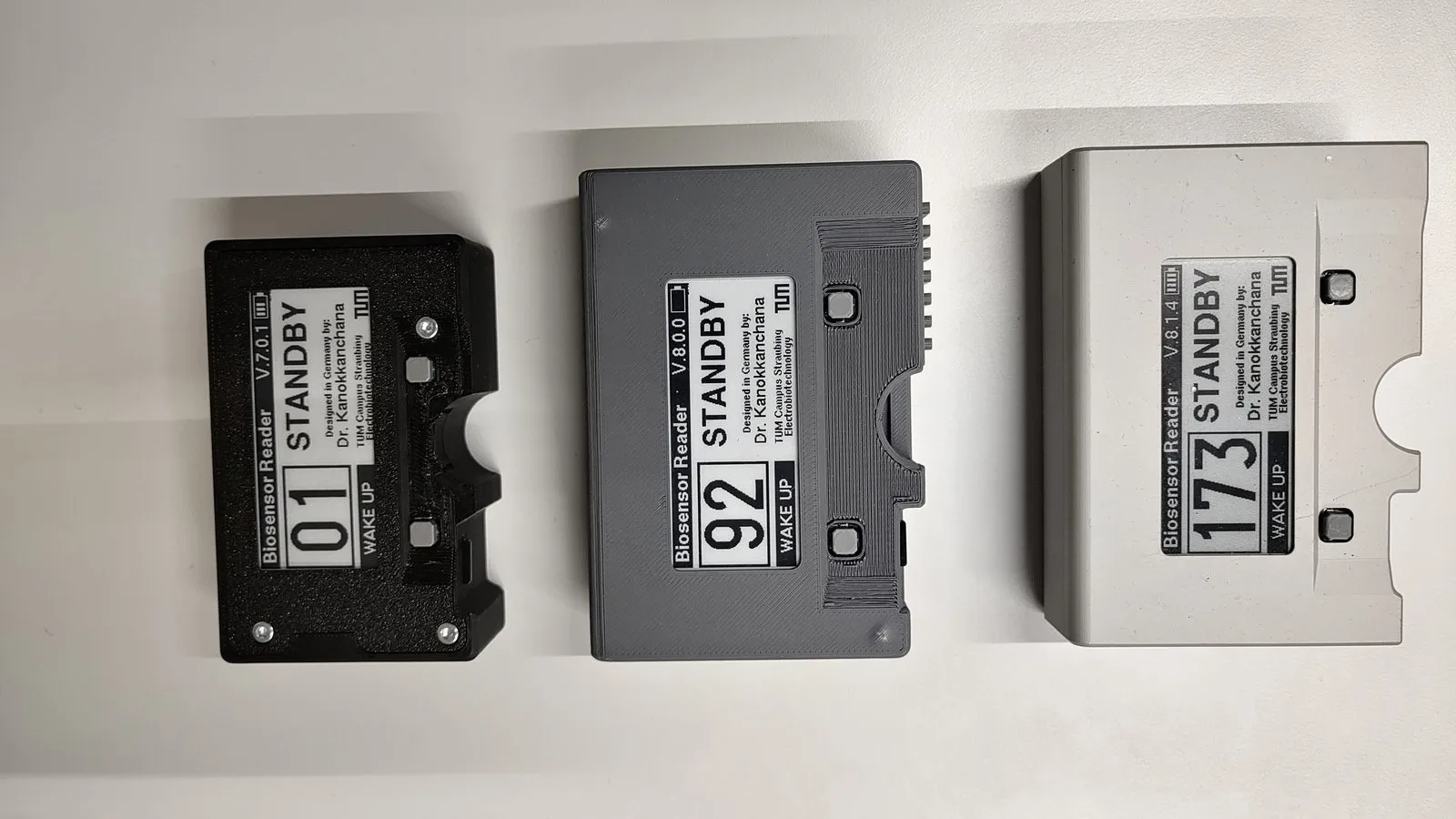
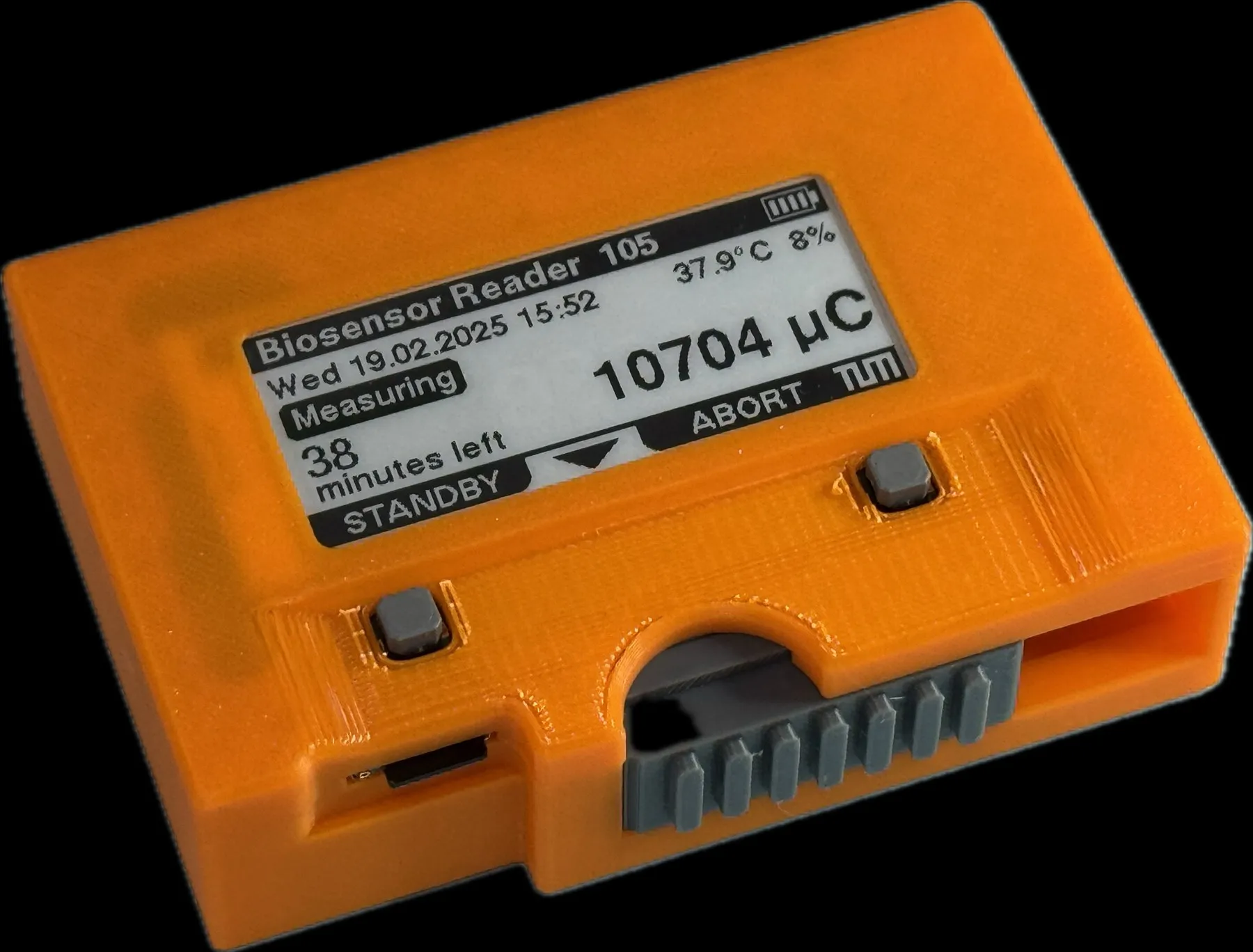
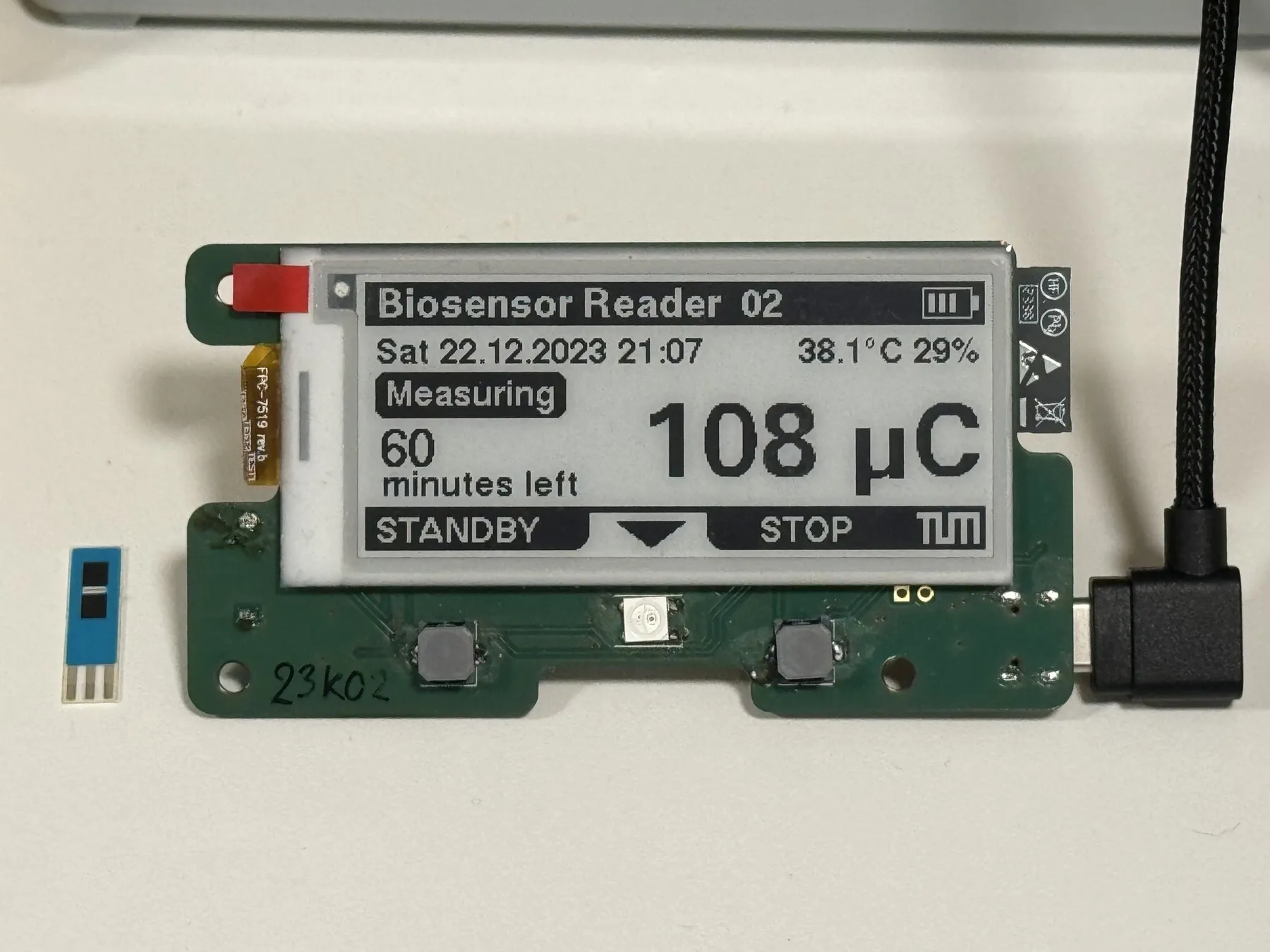
The first proof-of-concept unit was hand-assembled in 2023 and already outperformed the commercial reader it replaced, at a tenth of the cost. In 2024 a fleet of 36 field-ready units followed, each with its own ID, working as a swarm rather than as a single instrument. In 2025 the design was reworked for manufacturing — an enclosed sensor chamber with magnetic lid detection, a machined aluminium enclosure with in-house 3D-printed parts, and a board revised for an assembly house’s design rules — and 200 units were built, calibrated and deployed.
Each board goes through the same route: outsourced fabrication and assembly, then individual inspection, firmware upload, hardware diagnostics, initial calibration and final assembly in-house. It is hardware iteration at start-up pace, inside an academic setting.
The application
In its first application the instrument read disposable enzymatic sensor strips developed by colleagues, outdoors and in non-specialist hands. The electronics are agnostic to the chemistry on the strip: the same platform serves agricultural, environmental, point-of-care and food analysis.
At a glance
- Three generations in three years: 1 → 36 → 200 units
- Analogue front end, digital electronics, firmware and enclosure all designed in-house
- Standalone operation — one button, no laptop, unique device ID
- Heated measurement chamber regulated to ±0.1 °C
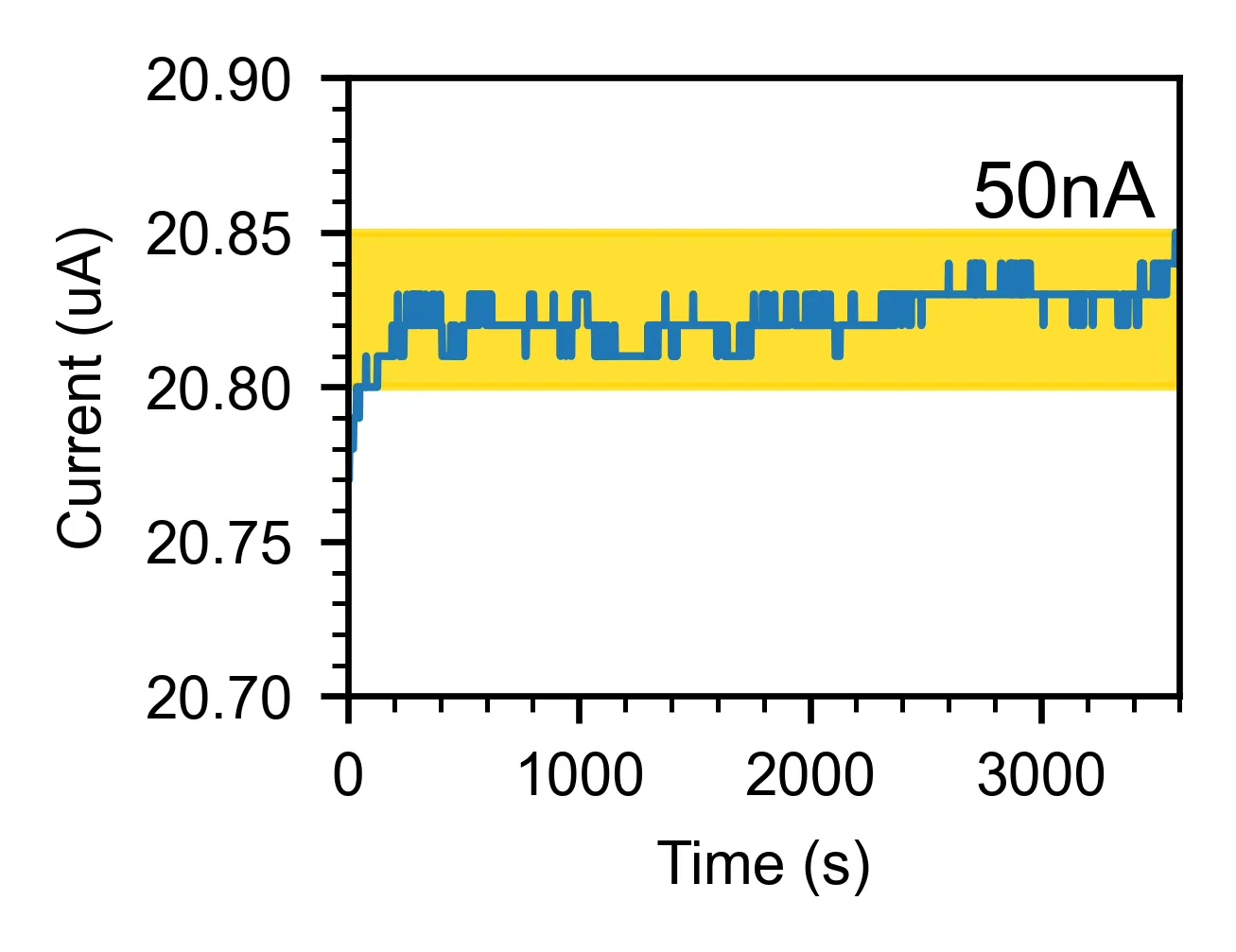
- Current noise of about 50 nA peak-to-peak at the 20 µA level
- Real-time clock, on-device logging, all-day battery
- Magnetic lid detection on the enclosed sensor chamber
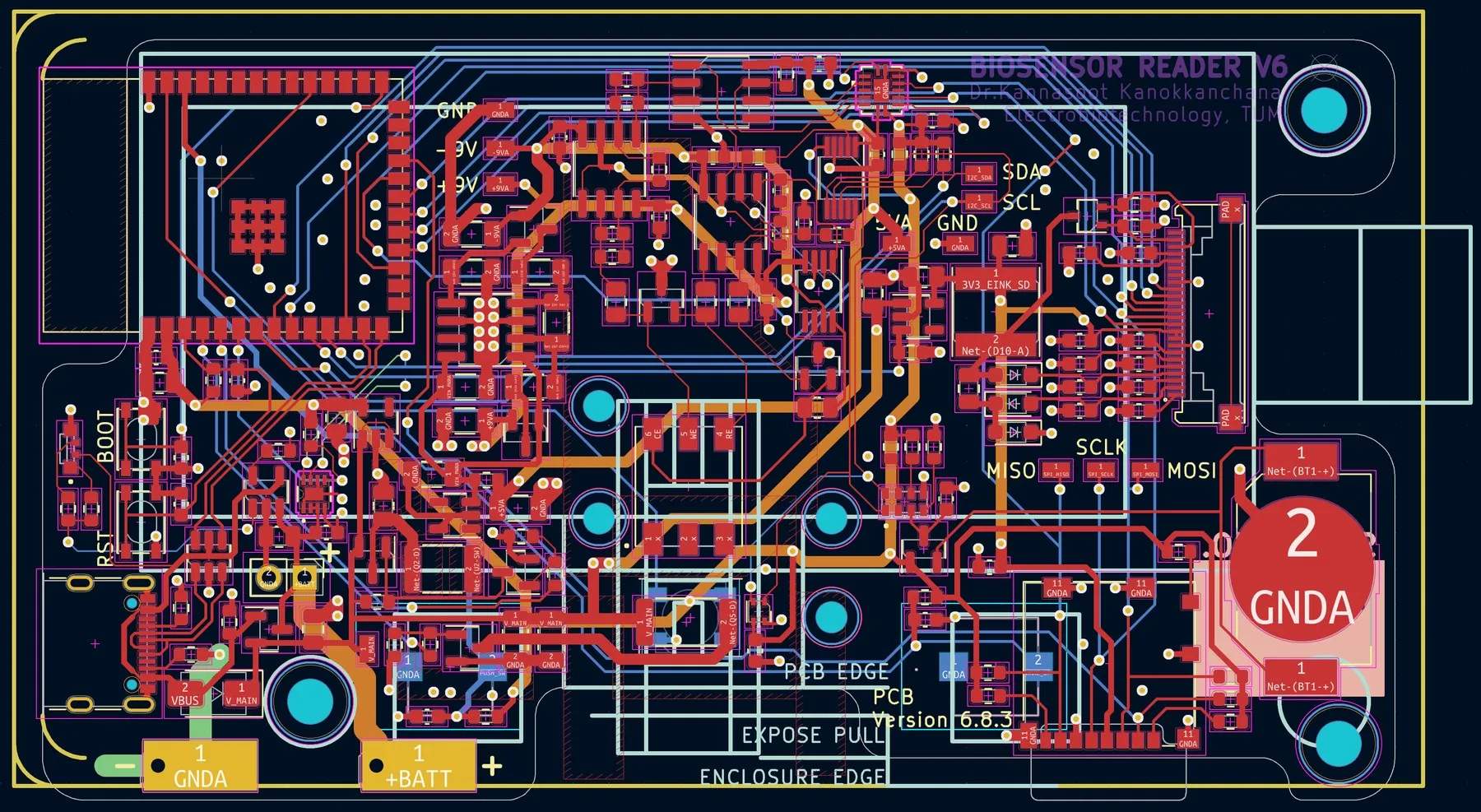
- 158 components on a four-layer board
In pictures