of Life
Episode 7 9:37
A Teleporter Cloned You by Mistake. 5 Years Later, You Met.
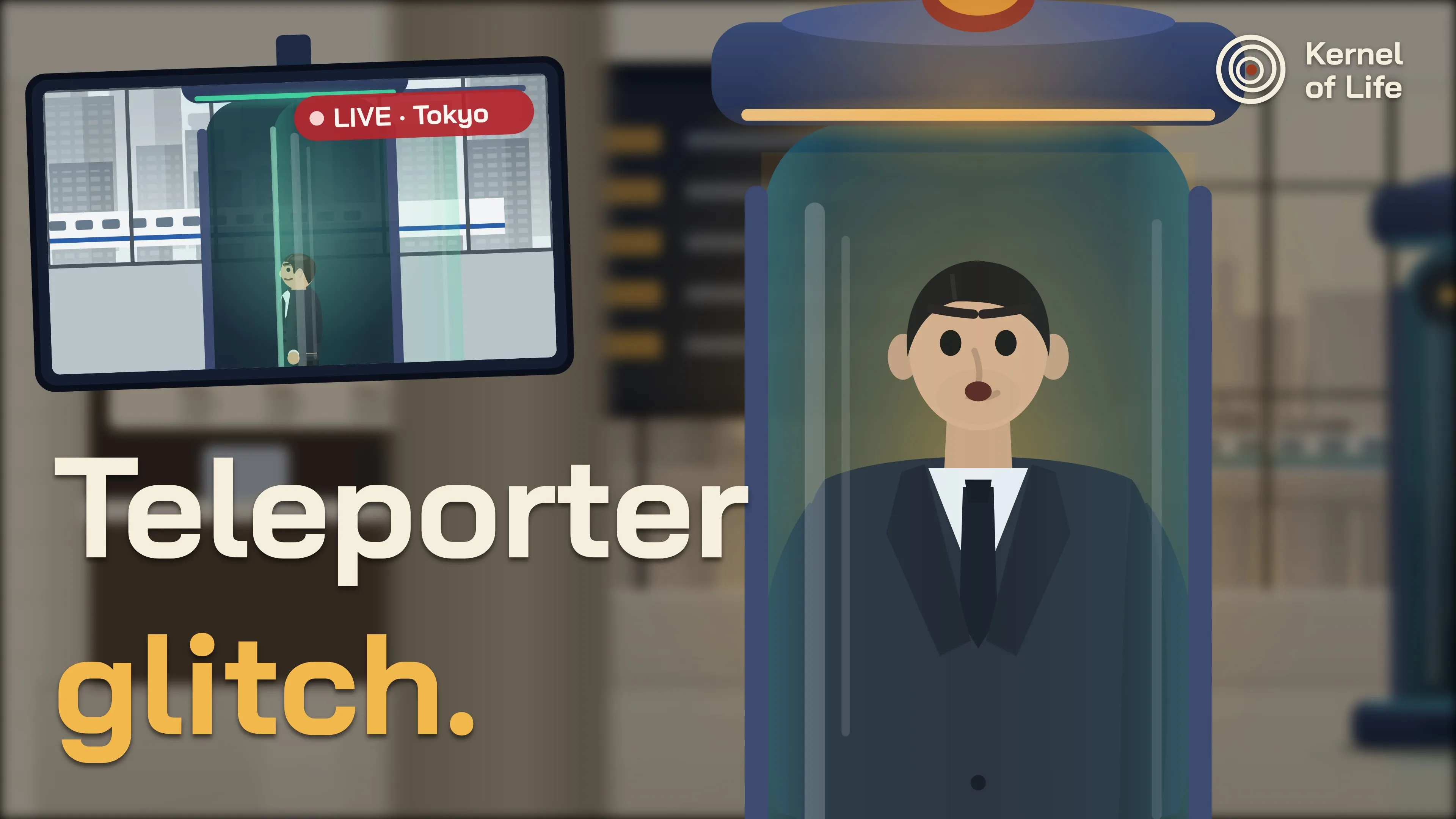
At 8:59 Tuesday morning, you step into Bangkok Terminal Booth 4 for a routine jump to Tokyo. The scanner freezes your brain for two seconds and prints a neuron-for-neuron duplicate at Shinagawa Station—then an amber fault trips the Bangkok laser before vaporization.
Thai version: เมื่อเลเซอร์ตู้วาร์ปขัดข้อง... 5 ปีต่อมา “คุณ” สองคนได้กลับมาเจอกัน
Script
At eight fifty-nine Tuesday morning, you pause outside Bangkok Terminal Booth Four and finish an iced black Americano. Your shoulders tighten as bitter coffee stings an empty stomach, a habit kept because an old professor once scoffed that serious architects never drink sweet things. Even in sticky thirty-degree morning air, you wear a dark charcoal blazer over a collar buttoned tight like armor. Beside your shoe rests a scuffed black blueprint tube holding your original hand-drawn sketches for a riverfront pavilion a senior director stole in a glass meeting room three years ago, when you were thirty-two, packed to lay before the regional chief in Tokyo this Thursday. You step inside. You have made this jump eleven times: a two-second neural freeze, an identical body printed at your firm’s Shinagawa hub, and clean vaporization of the frozen source body once arrival confirms. Green light sweeps from your parted hair to your shoes. Click. An amber fault light flashes, the freeze wears off, and you wake up still standing in Bangkok.
Opposite your booth, the live Tokyo monitor flickers on. Out steps a man in your charcoal blazer, an identical black tube at his side, rolling the stiff left side of his neck just as you always do. He looks straight into the camera and freezes. Officers seal both chambers. Because your neural freeze expired and your brain woke up, firing the Bangkok laser late is no longer standard transit clearing. Legally, it is murder. Within an hour, corporate legal triggers Duplicate Clause Fourteen B. Your savings split cleanly in two. You stay in Bangkok while he is barred from Thailand for five years and moved to an unrelated international team in Tokyo, killing Thursday’s ambush for both of you. A five-year no-contact order separates you, since eighty-four percent of duplicates who keep an open chat sue each other within six weeks. On file, your dark folder logs Primary Continuous Citizen, while his white Tokyo folder logs Instance B, Body Printed Tuesday, Zero History. Stepping onto hot Bangkok pavement, you exhale in quiet triumph. You walked away as the real one.
Wearing the crown of the Original turns your next five years into a relentless race to prove no copy could ever match you. At eleven fourteen at night, you pace the bathroom tiles rehearsing comebacks for that stolen design. Two weeks in, one burner-account peek catches him in the background of a Tokyo bar photo, still tilting his chin at that rigid angle you use to look unshaken; catching your hunched reflection in the dark screen, you close that tab and never look him up again for five years. Winding yourself tight as a steel spring, you work eighty-hour weeks, close massive developer deals, and check every box other people envy: executive partner on the top floor, a gleaming European sedan, a large house, land deeds in the safe, and staff bowing in every corridor. Yet at forty, the mirror shows a man pushing fifty. Silver streaks line your temples, your neck stays knotted hard, and a brass pill case sits in your pocket for blood pressure, stomach acid, and four-hour nights with a clenched jaw.
On the fifth anniversary morning, the ban lifts, and you agree to thirty minutes at a bright wood-and-glass Bangkok cafe. Parking your black luxury sedan right outside the window, you arrive early in a tailored dark suit, swallow a stomach tablet with your iced Americano, and brace to pity a duplicate who missed out on your empire. The glass door opens, and for a second you barely recognize yourself. A man with your exact frame walks in, a touch leaner, yet looking ten years younger than the face in your mirror: dark hair without silver, an unknotted brow, shoulders loose inside an ordinary plain crew-neck T-shirt, carrying nothing at his side. He rolls his neck without tension, nods warmly, and orders a warm mug of roasted hojicha milk tea, mentioning lightly that he stopped burning his stomach to impress an old professor years ago. Staring across the oak table sends a chill through you. You hold every trophy in Bangkok and look worn down to the bone; he walked in wearing a plain T-shirt with calm, rested eyes.
Rattled, you nod toward your sedan outside and mention making executive partner over the director who stole your pavilion, expecting envy or a flinch. He pauses two seconds, smiles genuinely, “Good for you,” and tells you what happened in Tokyo. For the first three weeks in a cramped Shinagawa studio, he panicked at two in the morning replaying that Bangkok glass room. Until late in week three, beside the printed tube at his door, when the comedy of it clicked: his twenty-one-day-old Tokyo cells had never stood in that room, and the man in Bangkok was already angry enough for both of them, so why clock in at eleven every night to work unpaid overtime hating someone? Even better, with a Zero History file and nobody to outshine, all the energy he used to burn guarding an image went straight into the craft itself. Renting a modest flat without status toys, he asked beginner questions without shame, poured himself into timber joinery just to see the work come alive, shared credit freely, and found teammates naturally warmed to someone who was never keeping score.
Leaning across the table in your tight suit, your voice turns sharp. “Easy to wear a plain T-shirt and smile when life over there has been gentle, when nothing truly frightening has hit you.” He pauses, shifts forward slightly, and below the loose collar of his T-shirt you catch the small scar and raised round disc of an implanted chemo port. Five months ago, he says evenly, routine age-forty tests found Stage Two colon cancer; his doctor cleared him to fly ten days after his fourth round of chemotherapy. Your breath catches. “Wait, we started from the exact same thirty-five-year-old cells, and I am the one living on stress pills. How did you get sick?” He smiles wryly. His Tokyo oncologist explained that billions of gut cells divide every week, and one random miscopy is enough to tip a cell over, neither a punishment nor a prize. Then he looks at you with quiet care. “Still, book a full screening next week. Sharing the exact same genes from Tuesday means you should not guess.”
Staring at his steady eyes, you ask quietly how his spirit has not collapsed, how he still looks lighter than you in the middle of chemotherapy. He does not pretend to be superhuman. “For three days after each drip, the white-cell shot makes my bones ache and heavy nausea flattens me to the mattress,” he says plainly. “When the doctor told me, I sat silent for ten minutes, and then we scheduled the surgery and the chemo. The physical pain is heavy, the way sick bodies hurt, so I look after the body properly, without tearing myself apart asking the sky why me.” His voice softens. “The strangest thing after hearing the diagnosis was realizing I did not need to quit my career, mend neglected friendships, or change a single thing about how I live, because I had already put down the fake life years ago.” He finishes the last of his warm tea, nods like a brother who knows every scar inside your head, and walks out onto the street.
You sit motionless at the oak table. Through the cafe glass gleams your black luxury sedan; beside your bitter coffee rests your brass pill case. One quiet question echoes in your chest: if a doctor handed you that same folder tomorrow morning, how many items on the checklist you tore yourself apart to win would feel like a life you actually lived? After a long silence, your tense shoulders drop two inches against the wooden backrest, the armor loosening for the first time in years. Tomorrow morning, bills, fragile cells, and everyone who knew you yesterday will still be waiting as usual. When fear of losing face or an old wound flares hot in your chest, years of habit will not vanish in one day: first you catch yourself ten minutes after snapping, then mid-sentence, then in the two quiet seconds before your jaw clenches. Yet you can still pour your whole heart into making good work grow, care for this body while it is here, and set the extra weight down today, before life has to pry your hands open.